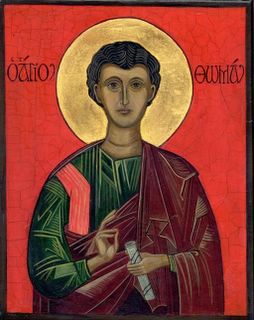
The third degree of humility is that a person for love of God submit himself to his Superior in all obedience, imitating the Lord, of whom the Apostle says, "He became obedient even unto death."
Is there a secular analogy to this rule?
In most communities there is some sort of hierarchy. But not every person in authority is our Superior in the same context as Benedict assumes.
Still, might obedience be a helpful response?
Obedience - the Latin is oboedientia - is to hear. Ought we not always listen carefully, endeavor to fully understand, and - unless clearly contrary to God's word - seek to do what we hear?
At the very least, superior or not, listening is the place to start.
Saturday, January 31, 2009

Friday, January 30, 2009

The second degree of humility is that a person love not his own will nor take pleasure in satisfying his desires, but model his actions on the saying of the Lord,"I have come not to do My own will, but the will of Him who sent Me" (John 6:38). It is written also,"Self-will has its punishment, but constraint wins a crown."
I perceive God created us with free will. Our freedom is part of God's intention.
I can imagine several different purposes. But I am not certain of God's purpose for giving us free will.
I perceive that Jesus discovered - and accepted - God's specific purpose for the application of his will.
In this I entirely agree with Benedict, Jesus is our model in how our will may find fulfillment in God's purpose.
But Benedict and I may disagree on the value of the will itself, which I understand to be a gift of God.
Above is a depiction of Saint Benedict from the Abbey of Saint Mary and Saint Louis in Creve Coeur, Missouri
Thursday, January 29, 2009
We must be on our guard, therefore, against evil desires, for death lies close by the gate of pleasure. Hence the Scripture gives this command:"Go not after your concupiscences" (Eccles. 18:30). So therefore,since the eyes of the Lord observe the good and the evil (Prov. 15:3)and the Lord is always looking down from heaven on the children of earth"to see if there be anyone who understands and seeks God" (Ps. 13[14]:2), and since our deeds are daily, day and night, reported to the Lord by the Angels assigned to us, we must constantly beware, brethren, as the Prophet says in the Psalm, lest at any time God see us falling into evil ways and becoming unprofitable (Ps. 13[14]:3); and lest, having spared us for the present because in His kindness He awaits our reformation, He say to us in the future,"These things you did, and I held My peace" (Ps. 49[50]:21).
Go not after your concupiscences.
Benedict is quoting from the 18th chapter of Ecclesiasticus or Sirach generally categorized within the Apocrypha. In context as translated by the New Revised Standard Version:
Do not follow your base desires, but restrain your appetites.
If you allow your soul to take pleasure in base desire, it will make you the laughingstock of your enemies.
While originally written in Hebrew, Sirach is part of the Greek Septuagint, which was subsequently translated into Latin. It is possible that Benedict only knew the Latin version. It is unlikely he was familiar with the Hebrew original.
I always want to giggle when hearing concupiscence. The sound and structure strike me as a tad ridiculous. It means to strongly desire something. It came to be the principal Church Latin euphemism for physical lust. Lust is how the King James version translates what Benedict refers to as concupiscence.
The Greek is epithymia. In Plato's allegory of the chariot, the two horses are named Thymos (emotion or passion) and Epithymia (desires or aversions). For Plato there is nothing inherently wrong with either of these powerful motivators. But both must be guided by the Charioteer, Logistikon or reason. The key to a good life, according to Plato, is symmetry and balance among the three parts.
Go not after your concupiscences.
Benedict is quoting from the 18th chapter of Ecclesiasticus or Sirach generally categorized within the Apocrypha. In context as translated by the New Revised Standard Version:
Do not follow your base desires, but restrain your appetites.
If you allow your soul to take pleasure in base desire, it will make you the laughingstock of your enemies.
While originally written in Hebrew, Sirach is part of the Greek Septuagint, which was subsequently translated into Latin. It is possible that Benedict only knew the Latin version. It is unlikely he was familiar with the Hebrew original.
I always want to giggle when hearing concupiscence. The sound and structure strike me as a tad ridiculous. It means to strongly desire something. It came to be the principal Church Latin euphemism for physical lust. Lust is how the King James version translates what Benedict refers to as concupiscence.
The Greek is epithymia. In Plato's allegory of the chariot, the two horses are named Thymos (emotion or passion) and Epithymia (desires or aversions). For Plato there is nothing inherently wrong with either of these powerful motivators. But both must be guided by the Charioteer, Logistikon or reason. The key to a good life, according to Plato, is symmetry and balance among the three parts.
Wednesday, January 28, 2009
As for self-will, we are forbidden to do our own will by the Scripture, which says to us,"Turn away from your own will" (Eccles. 18:30), and likewise by the prayer in which we ask God that His will be done in us. And rightly are we taught not to do our own will when we take heed to the warning of Scripture:"There are ways which seem right, but the ends of them plunge into the depths of hell" (Prov. 16:25); and also when we tremble at what is said of the careless:"They are corrupt and have become abominable in their will." And as for the desires of the flesh,let us believe with the Prophet that God is ever present to us, when he says to the Lord, "Every desire of mine is before You." (Ps. 37[38][38]:10).
Benedict writes of the voluntatem, the will or self-will.
What animates us? God's intention, God's desire, God's will... or something else?
Anything that distracts us from God is to be avoided. Ambition, love of self, love of others, anger, desire, all of these may compete for our soul's attention.
The Latin root of voluntatem - see our English voluntary and voluptuous here - is uelle. This is to strongly wish. For some ancient philosophers the will is a wishing that abides, a wish that lasts and gets things done.
I am not so sure it is our will that is problematic. We often - even the worst of us or each of us at our worst - wish to experience our own understanding of the Good, the True, and or the Beautiful.
Our wishing for such experiences may even be God-given. The problem comes when we seek to possess and control the experience. The more the wish for possession or control replaces the wish for actual experience, the greater our separation from God.
Benedict writes of the voluntatem, the will or self-will.
What animates us? God's intention, God's desire, God's will... or something else?
Anything that distracts us from God is to be avoided. Ambition, love of self, love of others, anger, desire, all of these may compete for our soul's attention.
The Latin root of voluntatem - see our English voluntary and voluptuous here - is uelle. This is to strongly wish. For some ancient philosophers the will is a wishing that abides, a wish that lasts and gets things done.
I am not so sure it is our will that is problematic. We often - even the worst of us or each of us at our worst - wish to experience our own understanding of the Good, the True, and or the Beautiful.
Our wishing for such experiences may even be God-given. The problem comes when we seek to possess and control the experience. The more the wish for possession or control replaces the wish for actual experience, the greater our separation from God.
Tuesday, January 27, 2009

Let a man consider that God is always looking at him from heaven,that his actions are everywhere visible to the divine eyes and are constantly being reported to God by the Angels. This is what the Prophet shows us when he represents God as ever present within our thoughts,in the words "Searcher of minds and hearts is God" (Ps. 7:10)and again in the words "The Lord knows the thoughts of men" (Ps. 93[94]:11). Again he says,"You have read my thoughts from afar" (Ps. 13[14]9:3) and "The thoughts of people will confess to You" (Ps. 75[76]:11). In order that he may be careful about his wrongful thoughts, therefore, let the faithful brother say constantly in his heart,"Then shall I be spotless before Him, if I have kept myself from my iniquity" (Ps. 17[18]:24).
When I was very young - first grade and before - I was convinced that everyone else could read minds, but I had been born without that skill.
Recognizing I was unable to know their full intention others were kind to me, did not discuss the issue, and did their best to explain what they would usually only need to think.
I was left doubly embarrassed. First that I had such a terrible disability. Second, that others could so easily know my "wrongful thoughts."
How this perception arose, I don't know. As with so many youthful conclusions it was adopted confidently, despite contradictory evidence.
This very early sense of being mentally naked continues in my relationship with God. I am often embarrassed. But it also results in not taking myself too seriously. So much of what I do or think - especially when most earnest - is so clearly ridiculous in God's eyes. All that either of us can do is laugh.
Above is a modern depiction of Benedict. I could not find one of him laughing or even smiling.
Monday, January 26, 2009
The first degree of humility, then, is that a person keep the fear of God before his eyes and beware of ever forgetting it. Let him be ever mindful of all that God has commanded; let his thoughts constantly recur to the hell-fire which will burn for their sins those who despise God, and to the life everlasting which is prepared for those who fear Him. Let him keep himself at every moment from sins and vices, whether of the mind, the tongue, the hands, the feet, or the self-will, and check also the desires of the flesh.
Fear... hell-fire ... sins and vices... desires of the flesh.
This is an unfortunate way to cultivate humility. Our impulse for self-preservation is used to discourage self-indulgence. The focus remains on the self.
Fear of eternal pain is used to discourage enjoyment of temporary pleasure. But here both pleasure and pain are self-referential.
Instead we might be encouraged to recognize more fully the power of our relationships. What of sympathy, empathy, and love?
Reality - in which we are to be grounded - is a web of relationships. In wise recognition of need for, connection with, and celebration of the other we are more likely to nurture humility.
Fear... hell-fire ... sins and vices... desires of the flesh.
This is an unfortunate way to cultivate humility. Our impulse for self-preservation is used to discourage self-indulgence. The focus remains on the self.
Fear of eternal pain is used to discourage enjoyment of temporary pleasure. But here both pleasure and pain are self-referential.
Instead we might be encouraged to recognize more fully the power of our relationships. What of sympathy, empathy, and love?
Reality - in which we are to be grounded - is a web of relationships. In wise recognition of need for, connection with, and celebration of the other we are more likely to nurture humility.
Sunday, January 25, 2009
Holy Scripture, brethren, cries out to us, saying,"Everyone who exalts himself shall be humbled, and he who humbles himself shall be exalted" (Luke 14:11).In saying this it shows us that all exaltation is a kind of pride, against which the Prophet proves himself to be on guard when he says,"Lord, my heart is not exalted,nor are mine eyes lifted up; neither have I walked in great matters,nor in wonders above me."But how has he acted?"Rather have I been of humble mind than exalting myself; as a weaned child on its mother's breast, so You solace my soul" (Ps. 13[14]0[131][131]:1-2). Hence, brethren, if we wish to reach the very highest point of humility and to arrive speedily at that heavenly exaltation to which ascent is made through the humility of this present life, we must by our ascending actions erect the ladder Jacob saw in his dream, on which Angels appeared to him descending and ascending. By that descent and ascent we must surely understand nothing else than this, that we descend by self-exaltation and ascend by humility. And the ladder thus set up is our life in the world,which the Lord raises up to heaven if our heart is humbled. For we call our body and soul the sides of the ladder, and into these sides our divine vocation has inserted the different steps of humility and discipline we must climb.
Is there a confident humility?
There is confidence in what Benedict is writing about humility.
The Latin roots for homo (man and human) and humus (ground and soil) are the same. To be human is to be of the ground. Humus has kept this meaning in English.
Humility is to know one's purpose and place, to be grounded in reality. To be exalted is to be raised high above the ground, to be detached from reality.
With a keen grasp of reality and strong sense of purpose the humble can be bold.
Is there a confident humility?
There is confidence in what Benedict is writing about humility.
The Latin roots for homo (man and human) and humus (ground and soil) are the same. To be human is to be of the ground. Humus has kept this meaning in English.
Humility is to know one's purpose and place, to be grounded in reality. To be exalted is to be raised high above the ground, to be detached from reality.
With a keen grasp of reality and strong sense of purpose the humble can be bold.
Saturday, January 24, 2009

Let us do what the Prophet says:"I said, 'I will guard my ways, that I may not sin with my tongue. I have set a guard to my mouth.' I was mute and was humbled, and kept silence even from good things" (Ps. 38[39][39]:2-3). Here the Prophet shows that if the spirit of silence ought to lead us at times to refrain even from good speech, so much the more ought the punishment for sin make us avoid evil words. Therefore, since the spirit of silence is so important, permission to speak should rarely be granted even to perfect disciples, though it be for good, holy edifying conversation; it is written,"In much speaking you will not escape sin" (Prov. 10:19), and in another place,"Death and life are in the power of the tongue" (Prov. 18:21). For speaking and teaching belong to the mistress; the disciple's part is to be silent and to listen. And for that reason if anything has to be asked of the Superior, it should be asked with all the humility and submission inspired by reverence. But as for coarse jests and idle words or words that move to laughter, these we condemn everywhere with a perpetual ban, and for such conversation we do not permit a disciple to open her mouth.
In my professional life I am known for asking questions, listening, and saying little. No doubt I say more than Benedict encourages, but much less than my colleagues or competitors.
I am sometimes a teacher. My classes are mostly a line of inquiry to which the students respond and, as they respond, I ask more questions. They discover more than I teach.
These are professional disciplines consciously developed and carefully deployed. They have served me well. I think and hope they have served others well.
In my personal life I have become something of a story-teller. When we join others my wife wonders what new story she may hear and what others she will hear for the 100th time.
I seek words that move to laughter. Sometimes she gently reminds me, "You don't always have to be the entertainer." To refrain even from good speech is a lesson yet to be learned.
Above is a depiction of Saint Benedict listening before the throne of God. In the foreground Mary seems to encourage his followers to silence. (Saint Meinrad Abbey, Indiana)
Friday, January 23, 2009
But this very obedience will be acceptable to God and pleasing to all only if what is commanded is done without hesitation, delay, lukewarmness, grumbling, or objection. For the obedience given to Superiors is given to God, since He Himself has said,"He who hears you, hears Me" (Luke 10:16). And the disciples should offer their obedience with a good will, for "God loves a cheerful giver" (2 Cor. 9:7). For if the disciple obeys with an ill will and murmurs, not necessarily with his lips but simply in his heart, then even though he fulfill the command yet his work will not be acceptable to God, who sees that his heart is murmuring. And, far from gaining a reward for such work as this, he will incur the punishment due to murmurers, unless he amend and make satisfaction.
I am very seldom commanded. I am self-employed. My clients expect me to be creative. My role at church and at home is principally that of a volunteer.
There are certainly tasks that I enjoy more and less. With the less enjoyable I will sometimes procrastinate. The delay usually adds to the burden of the work.
But I do murmur and grumble at myself. This is typically because I am dissatisfied with how I have fulfilled my own choices. I will even curse myself.
Self-critique can be healthy and valuable. But this grumbling and cursing is something else. It is a self-abuse that can continue decades after the task or outcome.
It is a sinful egotism that is an impediment to experiencing the love of God. I need to stop looking to the past and embrace God's command for the present.
I am very seldom commanded. I am self-employed. My clients expect me to be creative. My role at church and at home is principally that of a volunteer.
There are certainly tasks that I enjoy more and less. With the less enjoyable I will sometimes procrastinate. The delay usually adds to the burden of the work.
But I do murmur and grumble at myself. This is typically because I am dissatisfied with how I have fulfilled my own choices. I will even curse myself.
Self-critique can be healthy and valuable. But this grumbling and cursing is something else. It is a self-abuse that can continue decades after the task or outcome.
It is a sinful egotism that is an impediment to experiencing the love of God. I need to stop looking to the past and embrace God's command for the present.
Thursday, January 22, 2009
The first degree of humility is obedience without delay.This is the virtue of those who hold nothing dearer to them than Christ;who, because of the holy service they have professed, and the fear of hell, and the glory of life everlasting,as soon as anything has been ordered by the Superior, receive it as a divine command and cannot suffer any delay in executing it. Of these the Lord says,"As soon as he heard, he obeyed Me" (Ps. 17[18]:45). And again to teachers He says,"He who hears you, hears Me" (Luke 10:16). Such as these, therefore,immediately leaving their own affairs and forsaking their own will,dropping the work they were engaged onand leaving it unfinished,with the ready step of obedience follow up with their deeds the voice of him who commands.And so as it were at the same moment the master's command is given and the disciple's work is completed,the two things being speedily accomplished together in the swiftness of the fear of God by those who are moved with the desire of attaining life everlasting. That desire is their motive for choosing the narrow way, of which the Lord says,"Narrow is the way that leads to life" (Matt. 7:14), so that, not living according to their own choice nor obeying their own desires and pleasures but walking by another's judgment and command,they dwell in monasteries and desire to have an Abbot over them. Assuredly such as these are living up to that maxim of the Lord in which He says,"I have come not to do My own will,but the will of Him who sent Me" (John 6:38).
I am interested in how we choose and especially in how I choose.
I have sought out certain principles to inform my choosing. Of particular importance are: awareness of context, openness to the gifts of others, and responding to context and others with creativity.
Awareness of context leads me to ask what is real and what are the relationships that matter most to this reality. This principle encourages careful listening and observation.
I have concluded that our context is fundamentally good and beautiful, but it is also wounded, fractured, and in need of healing.
Openness to the gifts of others leads me to ask others what they perceive and what they can contribute to healing the world.
I have found that each of us are in search of wholeness and have much to contribute. But I have also found fear and cynicism. I have found in myself and others wounds which obscure perception and complicate what we would contribute.
I do not - yet - seek to "walk by another's judgment." It is my present hope and effort to sufficiently shape my own choosing that I consistently join with others in attention and humility. Then together we might heal what is hurt and experience the wholeness God intended... if only for a moment.
I am interested in how we choose and especially in how I choose.
I have sought out certain principles to inform my choosing. Of particular importance are: awareness of context, openness to the gifts of others, and responding to context and others with creativity.
Awareness of context leads me to ask what is real and what are the relationships that matter most to this reality. This principle encourages careful listening and observation.
I have concluded that our context is fundamentally good and beautiful, but it is also wounded, fractured, and in need of healing.
Openness to the gifts of others leads me to ask others what they perceive and what they can contribute to healing the world.
I have found that each of us are in search of wholeness and have much to contribute. But I have also found fear and cynicism. I have found in myself and others wounds which obscure perception and complicate what we would contribute.
I do not - yet - seek to "walk by another's judgment." It is my present hope and effort to sufficiently shape my own choosing that I consistently join with others in attention and humility. Then together we might heal what is hurt and experience the wholeness God intended... if only for a moment.
Wednesday, January 21, 2009

62. To fulfill God's commandments daily in one's deeds.
63. To love chastity.
64. To hate no one.
65. Not to be jealous, not to harbor envy.
66. Not to love contention.
67. To beware of haughtiness.
68. And to respect the seniors.
69. To love the juniors.
70. To pray for one's enemies in the love of Christ.
71. To make peace with one's adversary before the sun sets.
72. And never to despair of God's mercy.
These, then, are the tools of the spiritual craft. If we employ them unceasingly day and night, and return them on the Day of Judgment,our compensation from the Lord will be that wage He has promised:"Eye has not seen, nor ear heard,what God has prepared for those who love Him" (1 Cor. 2:9). Now the workshop in which we shall diligently execute all these tasks is the enclosure of the monastery and stability in the community.
Given the violent and difficult times in which he lived, the Rule of Benedict is extraordinary in its commitment to practical peace-making.
Love begets forgiveness. Forgiveness may beget love. At the very least the interplay of love and forgiveness effectively excludes hate.
Even more than in those end-times, we would benefit from Benedict's disciplines. How are we to live in an increasingly crowded and contentious world?
The monastery may not be available to us, but the community is at hand and in need. So are we in need to learn how to fulfill God's intention in our daily deeds.
Gracious God help us to receive the wisdom of Benedict and apply it to our days.
Above is a depiction of St. Benedict by Fra Angelico in San Marco, Florence.
Tuesday, January 20, 2009
44. To fear the Day of Judgment. 45. To be in dread of hell. 46. To desire eternal life with all the passion of the spirit. 47. To keep death daily before one's eyes. 48. To keep constant guard over the actions of one's life. 49. To know for certain that God sees one everywhere. 50. When evil thoughts come into one's heart, to dash them against Christ immediately. 51. And to manifest them to one's spiritual mother. 52. To guard one's tongue against evil and depraved speech. 53. Not to love much talking. 54. Not to speak useless words or words that move to laughter. 55. Not to love much or boisterous laughter. 56. To listen willingly to holy reading. 57. To devote oneself frequently to prayer. 58. Daily in one's prayers, with tears and sighs, to confess one's past sins to God, and to amend them for the future. 59. Not to fulfill the desires of the flesh; to hate one's own will. 60. To obey in all things the commands of the Abbess, even though she herself (which God forbid) should act otherwise, mindful of the Lord's precept, "Do what they say, but not what they do."61. Not to wish to be called holy before one is holy; but first to be holy, that one may be truly so called.
Benedict lived during a dramatic end-time. Seventy years before his birth Rome was sacked by the Visigoths. A half-century before, Augustine died defending Hippo. Britain fell to the Saxons.
In 451 Attila invades Italy. In 455 the Vandals take Rome and kidnap the Empress Eudoxia. In 476 - four years before the birth of Benedict - the last Roman emperor in the West is deposed by the Ostrogoths. A century of unceasing turmoil descends on Italy.
Shortly after Benedict founded his monastery (529) the bubonic plague killed tens of thousands across the Mediterranean world. The same year in which Benedict issued his Rule was when the Emperor Justinian closed the the Academy and Lyceum in Athens.
From these endings emerged St. Kevin's in Ireland, Iona off Scotland, and Monte Casino in Italy. A millennium of classical civilization was closing. Benedict and others responded creatively to these endings.
But it is hardly surprising to find that, even in his creating, Benedict was preoccupied with death.
Benedict lived during a dramatic end-time. Seventy years before his birth Rome was sacked by the Visigoths. A half-century before, Augustine died defending Hippo. Britain fell to the Saxons.
In 451 Attila invades Italy. In 455 the Vandals take Rome and kidnap the Empress Eudoxia. In 476 - four years before the birth of Benedict - the last Roman emperor in the West is deposed by the Ostrogoths. A century of unceasing turmoil descends on Italy.
Shortly after Benedict founded his monastery (529) the bubonic plague killed tens of thousands across the Mediterranean world. The same year in which Benedict issued his Rule was when the Emperor Justinian closed the the Academy and Lyceum in Athens.
From these endings emerged St. Kevin's in Ireland, Iona off Scotland, and Monte Casino in Italy. A millennium of classical civilization was closing. Benedict and others responded creatively to these endings.
But it is hardly surprising to find that, even in his creating, Benedict was preoccupied with death.
Monday, January 19, 2009
22. Not to give way to anger.
23. Not to nurse a grudge.
24. Not to entertain deceit in one's heart.
25. Not to give a false peace.
26. Not to forsake charity.
27. Not to swear, for fear of perjuring oneself.
28. To utter truth from heart and mouth.
29. Not to return evil for evil.
30. To do no wrong to anyone, and to bear patiently wrongs done to oneself.
31. To love one's enemies.
32. Not to curse those who curse us, but rather to bless them.
33. To bear persecution for justice's sake.
34. Not to be proud.
35. Not addicted to wine.
36. Not a great eater.
37. Not drowsy.
38. Not lazy.
39. Not a grumbler.
40. Not a detractor.
41. To put one's hope in God.
42. To attribute to God, and not to self, whatever good one sees in oneself.
43. But to recognize always that the evil is one's own doing, and to impute it to oneself.
Recently I went to the Department of Motor Vehicles. I had failed to renew my car registration when due. When a polite policewoman noticed she was required to ticket me because it had been over six months.
Because it had been over six months it was necessary for me to appear at DMV in person. After waiting an hour I discovered they could not give me the new registration because I was past-due paying the county property tax on the car.
It was easy to recognize that this "evil" was all my own doing. I was annoyed at myself, but it was also a good opportunity to read in the waiting area and catch up on some chores while I was in town.
The second time I returned to DMV the stranger behind me began grumbing as we came through the door. There was a long-line to get an assignment number. The waiting room was full.
"This will take an hour!" he announced to no one in particular. More like two I thought to myself, but I did not repond. "There are seven windows with no one at them," he offered with amazement.
Maybe some acknowledgement will help, so I offered it was almost as bad as the line at an amusement park. This only encouraged more detractions and criticisms. He eventually blamed Barack Obama for the situation (this was three weeks before the inaugural).
I don't think my neighbor in line had read Benedict. I was happy to finally ease into a seat with my book. How much happier we can be when following the Rule.
23. Not to nurse a grudge.
24. Not to entertain deceit in one's heart.
25. Not to give a false peace.
26. Not to forsake charity.
27. Not to swear, for fear of perjuring oneself.
28. To utter truth from heart and mouth.
29. Not to return evil for evil.
30. To do no wrong to anyone, and to bear patiently wrongs done to oneself.
31. To love one's enemies.
32. Not to curse those who curse us, but rather to bless them.
33. To bear persecution for justice's sake.
34. Not to be proud.
35. Not addicted to wine.
36. Not a great eater.
37. Not drowsy.
38. Not lazy.
39. Not a grumbler.
40. Not a detractor.
41. To put one's hope in God.
42. To attribute to God, and not to self, whatever good one sees in oneself.
43. But to recognize always that the evil is one's own doing, and to impute it to oneself.
Recently I went to the Department of Motor Vehicles. I had failed to renew my car registration when due. When a polite policewoman noticed she was required to ticket me because it had been over six months.
Because it had been over six months it was necessary for me to appear at DMV in person. After waiting an hour I discovered they could not give me the new registration because I was past-due paying the county property tax on the car.
It was easy to recognize that this "evil" was all my own doing. I was annoyed at myself, but it was also a good opportunity to read in the waiting area and catch up on some chores while I was in town.
The second time I returned to DMV the stranger behind me began grumbing as we came through the door. There was a long-line to get an assignment number. The waiting room was full.
"This will take an hour!" he announced to no one in particular. More like two I thought to myself, but I did not repond. "There are seven windows with no one at them," he offered with amazement.
Maybe some acknowledgement will help, so I offered it was almost as bad as the line at an amusement park. This only encouraged more detractions and criticisms. He eventually blamed Barack Obama for the situation (this was three weeks before the inaugural).
I don't think my neighbor in line had read Benedict. I was happy to finally ease into a seat with my book. How much happier we can be when following the Rule.
Sunday, January 18, 2009

1. In the first place, to love the Lord God with the whole heart, the whole soul, the whole strength. 2. Then, one's neighbor as oneself. 3. Then not to murder. 4. Not to commit adultery. 5. Not to steal. 6. Not to covet. 7. Not to bear false witness. 8. To honor all (1 Peter 2:17).9. And not to do to another what one would not have done to oneself. 10. To deny oneself in order to follow Christ. 11. To chastise the body.12. Not to become attached to pleasures. 13. To love fasting. 14. To relieve the poor. 15. To clothe the naked.16. To visit the sick. 17. To bury the dead. 18. To help in trouble. 19. To console the sorrowing. 20. To become a stranger to the world's ways. 21. To prefer nothing to the love of Christ.
It is my rule not to look ahead, but I have nonetheless done so. Benedict gives us seventy-two "tools of the spiritual craft."
I recognize and accept most of these twenty-one. But I do not love wholly. I am too often divided and distracted. I very seldom deny myself to follow Christ. I do very little to relieve the poor, clothe the naked, or visit the sick.
Forgive me and strengthen me.
I am not a stranger to the world's ways, but the world's way are often strange to me and in many instances I do not or cannot practice the ways of the world even when I try.
Should I seek greater understanding or accept more happily my apparent innocence?
I wonder about Benedict's instruction to chastise - castigare - the body. I am aware of Paul's teaching and what has been done with his teaching. But is this the will of God who created our bodies?
Above is a modern icon of Saint Benedict.
Saturday, January 17, 2009
In all things, therefore, let all follow the Rule as guide, and let no one be so rash as to deviate from it. Let no one in the monastery follow his own heart's fancy; and let no one presume to contend with his Abbot in an insolent way or even outside of the monastery. But if anyone should presume to do so, let him undergo the discipline of the Rule. At the same time, the Abbot himself should do all things in the fear of God and in observance of the Rule, knowing that beyond a doubt he will have to render an account of all his decisions to God, the most just Judge. But if the business to be done in the interests of the monastery be of lesser importance, let him take counsel with the seniors only. It is written, "Do everything with counsel, and you will not repent when you have done it" (Eccles. 32:24).
God informs scripture. Scripture informs the Rule. The Rule informs the Abbot. God, scripture, the Rule, and the Abbot guide all in the monastery.
We are not to follow our "heart's fancy" - cordis voluntatem - or the spontaneous desires of the will. We are to be disciplined in matching our choices to the guidance given.
Are there times when God, or scripture, or the Rule, or the Abbot seem to be in disagreement? If so, take counsel together.
God informs scripture. Scripture informs the Rule. The Rule informs the Abbot. God, scripture, the Rule, and the Abbot guide all in the monastery.
We are not to follow our "heart's fancy" - cordis voluntatem - or the spontaneous desires of the will. We are to be disciplined in matching our choices to the guidance given.
Are there times when God, or scripture, or the Rule, or the Abbot seem to be in disagreement? If so, take counsel together.
Friday, January 16, 2009
Whenever any important business has to be done in the monastery, let the Abbot call together the whole community and state the matter to be acted upon. Then, having heard the brethren's advice, let him turn the matter over in his own mind and do what he shall judge to be most expedient. The reason we have said that all should be called for counsel is that the Lord often reveals to the younger what is best. Let the brethren give their advice with all the deference required by humility,and not presume stubbornly to defend their opinions; but let the decision rather depend on the Abbot's judgment, and all submit to whatever he shall decide for their welfare. However, just as it is proper for the disciples to obey their master, so also it is his function to dispose all things with prudence and justice.
Choices must be made. The right choice is not always clear. It may not even exist.
But there will always be better and worse choices. It is helpful for the community to be involved in choosing. It is helpful for the leader to hear the judgments of the community.
There is a role for leadership. There is a place for authority when it is exercised with prudence to advance justice.
Prudence is a translation of the Latin pro vide - for seeing - suggesting a recognition of reality. There is also the Latin prudentia -the classical virtue of good reasoning - but this is not what Benedict used.
The leader - all of us - are encouraged to see and act on what exists more than reason into being what we want to exist. Too often we are inclined to reason ourselves into illusion.
Choices must be made. The right choice is not always clear. It may not even exist.
But there will always be better and worse choices. It is helpful for the community to be involved in choosing. It is helpful for the leader to hear the judgments of the community.
There is a role for leadership. There is a place for authority when it is exercised with prudence to advance justice.
Prudence is a translation of the Latin pro vide - for seeing - suggesting a recognition of reality. There is also the Latin prudentia -the classical virtue of good reasoning - but this is not what Benedict used.
The leader - all of us - are encouraged to see and act on what exists more than reason into being what we want to exist. Too often we are inclined to reason ourselves into illusion.
Thursday, January 15, 2009

Above all let her not neglect or undervalue the welfare of the souls committed to her, in a greater concern for fleeting, earthly, perishable things; but let her always bear in mind that she has undertaken the government of souls and that she will have to give an account of them. And if she be tempted to allege a lack of earthly means, let her remember what is written: "First seek the kingdom of God and His justice, and all these things shall be given you besides" (Ps. 33[34]:10). And again: "Nothing is wanting to those who fear Him."Let her know, then, that she who has undertaken the government of souls must prepare herself to render an account of them. Whatever number of sisters she knows she has under her care, she may be sure beyond doubt that on Judgment Day she will have to give the Lord an account of all these souls, as well as of her own soul. Thus the constant apprehension about her coming examination as shepherd (Ezech. 34) concerning the sheep entrusted to her, and her anxiety over the account that must be given for others, make her careful of her own record. And while by her admonitions she is helping others to amend, she herself is cleansed of her faults.
I am self-reflective. This is both a gift and a curse. Regardless, it is a part of me that would be foolish to reject and - to avoid the worst self-indulgence - needs discipline and cultivation.
But it is in living and working with others that the self is fulfilled. Perhaps this is why Benedict was carefully critical of the lonely Anchorites.
There is need for quiet separation. There is value in wilderness and mountain-top epiphanies. But the value is redeemed in our communion with others.
Benedict seeks to motivate through the prospect of future judgement. I am uncertain of the theological or practical implications of such a threat.
The fulfillment I experience when helping others - and am in the process cleansed of my faults - seems sufficient motivation.
Above is Saint Benedict Tried by the Devil by Lorenzo Monaco.
Wednesday, January 14, 2009
The Abbess should always remember what she is and what she is called, and should know that to whom more is committed, from her more is required (Luke 12:48). Let her understand also what a difficult and arduous task she has undertaken: ruling souls and adapting herself to a variety of characters.One she must coax, another scold, another persuade, according to each one's character and understanding. Thus she must adjust and adapt herself to all in such a way that she may not only suffer no loss in the flock committed to her care, but may even rejoice in the increase of a good flock.
Leaders often proclaim they have stuck to their principles; by which they too often mean their preconceived understanding.
Benedict urges the leader to adjust and adapt to reality. The leader must give special attention the character of others.
I very much like the translation of Benedict offered above, "adapting herself to a variety of characters."
The original Latin is multorum servire moribus. A more literal translation might be, "by much service (or need) to die."
Adaptation is not easy and death is not to be feared.
Leaders often proclaim they have stuck to their principles; by which they too often mean their preconceived understanding.
Benedict urges the leader to adjust and adapt to reality. The leader must give special attention the character of others.
I very much like the translation of Benedict offered above, "adapting herself to a variety of characters."
The original Latin is multorum servire moribus. A more literal translation might be, "by much service (or need) to die."
Adaptation is not easy and death is not to be feared.
Tuesday, January 13, 2009
In her teaching the Abbess should always follow the Apostle's formula:"Reprove, entreat, rebuke" (2 Tim. 4:2); threatening at one time and coaxing at another as the occasion may require, showing now the stern countenance of a mistress, now the loving affection of a mother. That is to say, it is the undisciplined and restless whom she must reprove rather sharply; it is the obedient, meek and patient whom she must entreat to advance in virtue; while as for the negligent and disdainful, these we charge her to rebuke and correct. And let her not shut her eyes to the faults of offenders; but, since she has the authority, let her cut out those faults by the roots as soon as they begin to appear, remembering the fate of Heli, the priest of Silo (1 Kings 2-4).The well-disposed and those of good understanding let her correct with verbal admonition the first and second time. But bold, hard, proud and disobedient characters she should curb at the very beginning of their ill-doing by stripes and other bodily punishments, knowing that it is written, "the fool is not corrected with words" (Prov. 18:2; 29:19), and again, "Beat your son with the rod,and you will deliver his soul from death" (Prov. 23:13-14).
I recently offered that it is not our task to judge. Benedict disagrees.
The leader must, he argues, be very familiar with each member of the community. The leader must know the character, intention, and predilections of her colleagues.
Her leadership should be adapted to the individual: patient when patience is effective, punishing when punishment is effective.
The goal is not fairness. One may be treated very differently from another. The goal is to bring the individual to self-awareness and self-correction.
The ultimate goal is to remove whatever impedes the individual's full relationship with God.
I recently offered that it is not our task to judge. Benedict disagrees.
The leader must, he argues, be very familiar with each member of the community. The leader must know the character, intention, and predilections of her colleagues.
Her leadership should be adapted to the individual: patient when patience is effective, punishing when punishment is effective.
The goal is not fairness. One may be treated very differently from another. The goal is to bring the individual to self-awareness and self-correction.
The ultimate goal is to remove whatever impedes the individual's full relationship with God.
Monday, January 12, 2009

Let her make no distinction of persons in the monastery. Let her not love one more than another,unless it be one whom she finds betterin good works or in obedience.Let her not advance one of noble birth ahead of one who was formerly a slave, unless there be some other reasonable ground for it. But if the Abbess for just reason think fit to do so, let her advance one of any rank whatever. Otherwise let them keep their due places; because, whether slaves or free, we are all one in Christ (Gal. 3:28) and bear in equal burden of service in the army of the same Lord. For with God there is no respect of persons (Rom. 2:11). Only for one reason are we preferred in His sight: if we be found better than others in good works and humility. Therefore let the Abbess show equal love to all and impose the same discipline on all according to their deserts.
The Christian teaching of equality before God led to equality before the law which led to equal protection in rights which continues today - as yeast - to leaven our earthly consideration of one another.
The bread of equality is not yet fully risen, but how far it has come from the flat hard crust of Benedict's day! It is difficult for us to imagine - even more difficult to feel - the power of old hierarchies.
Before we congratulate ourselves overmuch, though, consider Benedict's criteria of merit: good works and humility. Do we cultivate these in ourselves? Do we honor these in others? The yeast still has work to do.
Above is Saint Benedict Restores a Monk to Life by Lorenzo Monaco.
Sunday, January 11, 2009
Therefore, when anyone receives the name of Abbess, she ought to govern her disciples with a twofold teaching.That is to say, she should show them all that is good and holy by her deeds even more than by her words, expounding the Lord's commandments in words to the intelligent among her disciples, but demonstrating the divine precepts by her actions for those of harder hearts and ruder minds. And whatever she has taught her disciples to be contrary to God's law, let her indicate by her example that it is not to be done, lest, while preaching to others, she herself be found reprobate (1 Cor. 9:27), and lest God one day say to her in her sin, "Why do you declare My statutes and profess My covenant with your lips, whereas you hate discipline and have cast My words behind you" (Ps. 49[50]:16-17)? And again,"You were looking at the speck in your brother's eye, and did not see the beam in your own" (Matt. 7:3).
Leadership is a matter of deeds rather than words.
How we live - what we do and choose not to do - is our principal means of teaching.
When what we say is coherent with what we do, then behavior amplifies belief. But if we behave contrary to what we believe others will doubt us - and our beliefs - no matter how eloquent and earnest our words.
Leadership is a matter of deeds rather than words.
How we live - what we do and choose not to do - is our principal means of teaching.
When what we say is coherent with what we do, then behavior amplifies belief. But if we behave contrary to what we believe others will doubt us - and our beliefs - no matter how eloquent and earnest our words.
Saturday, January 10, 2009
Let the Abbess always bear in mind that at the dread Judgment of God there will be an examination of these two matters: her teaching and the obedience of her disciples. And let the Abbess be sure that any lack of profit the master of the house may find in the sheep will be laid to the blame of the shepherd. On the other hand, if the shepherd has bestowed all her pastoral diligence on a restless, unruly flock and tried every remedy for their unhealthy behavior, then she will be acquitted at the Lord's Judgment and may say to the Lord with the Prophet: "I have not concealed Your justice within my heart; Your truth and Your salvation I have declared" (Ps. 39[40]:11). "But they have despised and rejected me" (Is. 1:2; Ezech. 20:27). And then finally let death itself, irresistible, punish those disobedient sheep under her charge.
We are, finally, responsible for our own choices. We cannot be responsible for the choices others undertake.
As parents, spouses, teachers, employers, colleagues, and friends we may share what wisdom we have. We can encourage. We can teach. We can hold accountable.
But we should not - really cannot (thank God) - choose for the other.
The sheep we would help may be disobedient and will suffer the consequence of their choice. But it is not our task to judge.
They may be a free human being who has found a different way to God. Humility and love are companions of wisdom.
We are, finally, responsible for our own choices. We cannot be responsible for the choices others undertake.
As parents, spouses, teachers, employers, colleagues, and friends we may share what wisdom we have. We can encourage. We can teach. We can hold accountable.
But we should not - really cannot (thank God) - choose for the other.
The sheep we would help may be disobedient and will suffer the consequence of their choice. But it is not our task to judge.
They may be a free human being who has found a different way to God. Humility and love are companions of wisdom.
Friday, January 9, 2009

An Abbess who is worthy to be over a monastery should always remember what she is called, and live up to the name of Superior. For she is believed to hold the place of Christ in the monastery, being called by a name of His, which is taken from the words of the Apostle: "You have received a Spirit of adoption ..., by virtue of which we cry, 'Abba -- Father'" (Rom. 8:15)!Therefore the Abbess ought not to teach or ordain or command anything which is against the Lord's precepts; on the contrary, her commands and her teaching should be a leaven of divine justice kneaded into the minds of her disciples.
Too often we choose the expedient way. There is a task to be done, we seek to complete it quickly... sometimes thoughtlessly.
Quite often the task is a step on journey. How does the task advance us toward our end?
To eat can be a quick and tasteless sustaining of the body; or it can be a sacrament of sense and conversation.
To respond to another can be an annoying interruption; or it can be a sacrament of love and service.
All the leader does should infuse the dough of daily life with the yeast of sacred potential.
Above St. Benedict delivers his Rule to the monks of his order.
Thursday, January 8, 2009
It is well known that there are four kinds of monks. The first kind are the Cenobites:those who live in monasteries and serve under a rule and an Abbot. The second kind are the Anchorites or Hermits: those who, no longer in the first fervor of their reformation, but after long probation in a monastery, having learned by the help of many brethren how to fight against the devil, go out well armed from the ranks of the community to the solitary combat of the desert. They are able now, with no help save from God, to fight single-handed against the vices of the flesh and their own evil thoughts. The third kind of monks, a detestable kind, are the Sarabaites.These, not having been tested, as gold in the furnace (Wis. 3:6), by any rule or by the lessons of experience, are as soft as lead. In their works they still keep faith with the world, so that their tonsure marks them as liars before God. They live in twos or threes, or even singly, without a shepherd, in their own sheepfolds and not in the Lord's. Their law is the desire for self-gratification: whatever enters their mind or appeals to them, that they call holy; what they dislike, they regard as unlawful. The fourth kind of monks are those called Gyrovagues.These spend their whole lives tramping from province to province, staying as guests in different monasteries for three or four days at a time. Always on the move, with no stability, they indulge their own wills and succumb to the allurements of gluttony, and are in every way worse than the Sarabaites. Of the miserable conduct of all such it is better to be silent than to speak. Passing these over, therefore, let us proceed, with God's help, to lay down a rule for the strongest kind of monks, the Cenobites.
Benedict's disdain for the Sarabaites and Gyrovagues is made clear.
He lays down the rule for the "strongest kind of monks, the Cenobites."
What is Benedict's assessment of the Anchorites? They evidently are not the strongest. Are they the most faithful? Do they not require a rule since they are alone?
I imagine myself as an Anchorite. But this is pretence. I am not alone.
I am probably closer to a Gyrovague and need the discipline of a Cenobite rule.
Benedict's disdain for the Sarabaites and Gyrovagues is made clear.
He lays down the rule for the "strongest kind of monks, the Cenobites."
What is Benedict's assessment of the Anchorites? They evidently are not the strongest. Are they the most faithful? Do they not require a rule since they are alone?
I imagine myself as an Anchorite. But this is pretence. I am not alone.
I am probably closer to a Gyrovague and need the discipline of a Cenobite rule.
Wednesday, January 7, 2009
And so we are going to establish a school for the service of the Lord. In founding it we hope to introduce nothing harsh or burdensome. But if a certain strictness results from the dictates of equity for the amendment of vices or the preservation of charity, do not be at once dismayed and fly from the way of salvation, whose entrance cannot but be narrow (Matt. 7:14).For as we advance in the religious life and in faith, our hearts expand and we run the way of God's commandments with unspeakable sweetness of love.Thus, never departing from His school, but persevering in the monastery according to His teaching until death, we may by patience share in the sufferings of Christ (1 Peter 4:13) and deserve to have a share also in His kingdom.
The Benedictine community is created as a school... for the service of the Lord.
We learn by doing, through action, in serving one another and our God.
It is a perpetual school. We never take a degree, at least not in this life.
Perhaps the learning and serving continue beyond this life.
Late in his life Michelangelo wrote, "I am still learning." He also told us, "Many believe - and I believe - that I have been designated for this work by God. In spite of my old age, I do not want to give it up; I work out of love for God and I put all my hope in Him."
The Benedictine community is created as a school... for the service of the Lord.
We learn by doing, through action, in serving one another and our God.
It is a perpetual school. We never take a degree, at least not in this life.
Perhaps the learning and serving continue beyond this life.
Late in his life Michelangelo wrote, "I am still learning." He also told us, "Many believe - and I believe - that I have been designated for this work by God. In spite of my old age, I do not want to give it up; I work out of love for God and I put all my hope in Him."
Tuesday, January 6, 2009

So, brothers and sisters, we have asked the Lord who is to dwell in His tent, and we have heard His commands to anyone who would dwell there; it remains for us to fulfill those duties. Therefore we must prepare our hearts and our bodies to do battle under the holy obedience of His commands; and let us ask God that He be pleased to give us the help of His grace for anything which our nature finds hardly possible. And if we want to escape the pains of hell and attain life everlasting, then, while there is still time, while we are still in the body and are able to fulfill all these things by the light of this life, we must hasten to do now what will profit us for eternity.
The founder of Western monasticism did not despise the body.
Our body is temporary, as a tent is temporary. But just as God may dwell in the tent of visitation, so God may dwell in each of us.
To welcome God we must prepare heart and body.
Above is a modern icon of St. Benedict of Nursia. There is a story that Benedict's life was once saved by a raven that brought him food.
Monday, January 5, 2009
Hence the Lord says in the Gospel, "Whoever listens to these words of Mine and acts upon them, I will liken to a wise person who built a house on rock. The floods came, the winds blew and beat against that house, and it did not fall, because it had been founded on rock" (Matt. 7:24-25). Having given us these assurances, the Lord is waiting every day for us to respond by our deeds to His holy admonitions. And the days of this life are lengthened and a truce granted us for this very reason, that we may amend our evil ways. As the Apostle says, "Do you not know that God's patience is inviting you to repent" (Rom. 2:4)?For the merciful Lord tells us, "I desire not the death of the sinner, but that the sinner should be converted and live" (Ezech. 33:11).
Listen and act. Hear and do. Understand and execute.
In seeking to do we listen in a new way. In doing we understand more completely.
This is the way of a good life and a happy death.
Listen and act. Hear and do. Understand and execute.
In seeking to do we listen in a new way. In doing we understand more completely.
This is the way of a good life and a happy death.
Sunday, January 4, 2009
Having our loins girded, therefore, with faith and the performance of good works (Eph. 6:14), let us walk in His paths by the guidance of the Gospel, that we may deserve to see Him who has called us to His kingdom (1 Thess. 2:12). For if we wish to dwell in the tent of that kingdom, we must run to it by good deeds or we shall never reach it.
But let us ask the Lord, with the Prophet, "Lord, who shall dwell in Your tent, or who shall rest upon Your holy mountain" (Ps. 14[15]:1)? After this question, brothers and sisters, let us listen to the Lord as He answers and shows us the way to that tent, saying, "The one Who walks without stain and practices justice; who speaks truth from his heart; who has not used his tongue for deceit; who has done no evil to his neighbor; who has given no place to slander against his neighbor."
This is the one who, under any temptation from the malicious devil, has brought him to naught (Ps. 14[15]:4) by casting him and his temptation from the sight of his heart; and who has laid hold of his thoughts while they were still young and dashed them against Christ (Ps. 13[14]6[137]:9).
It is they who, fearing the Lord (Ps. 14[15]:4), do not pride themselves on their good observance; but, convinced that the good which is in them cannot come from themselves and must be from the Lord, glorify the Lord's work in them (Ps. 14[15]:4), using the words of the Prophet,"Not to us, O Lord, not to us, but to Your name give the glory" (Ps. 113[115:1]:9). Thus also the Apostle Paul attributed nothing of the success of his preaching to himself, but said, "By the grace of God I am what I am" (1 Cor. 15:10). And again he says, "He who glories, let him glory in the Lord" (2 Cor. 10:17).
We may choose to walk His paths. We may deserve to see His tent.
But this is achieved not through good observance, but by and through the grace of God.
Without God's grace we cannot escape our own pride and error.
But let us ask the Lord, with the Prophet, "Lord, who shall dwell in Your tent, or who shall rest upon Your holy mountain" (Ps. 14[15]:1)? After this question, brothers and sisters, let us listen to the Lord as He answers and shows us the way to that tent, saying, "The one Who walks without stain and practices justice; who speaks truth from his heart; who has not used his tongue for deceit; who has done no evil to his neighbor; who has given no place to slander against his neighbor."
This is the one who, under any temptation from the malicious devil, has brought him to naught (Ps. 14[15]:4) by casting him and his temptation from the sight of his heart; and who has laid hold of his thoughts while they were still young and dashed them against Christ (Ps. 13[14]6[137]:9).
It is they who, fearing the Lord (Ps. 14[15]:4), do not pride themselves on their good observance; but, convinced that the good which is in them cannot come from themselves and must be from the Lord, glorify the Lord's work in them (Ps. 14[15]:4), using the words of the Prophet,"Not to us, O Lord, not to us, but to Your name give the glory" (Ps. 113[115:1]:9). Thus also the Apostle Paul attributed nothing of the success of his preaching to himself, but said, "By the grace of God I am what I am" (1 Cor. 15:10). And again he says, "He who glories, let him glory in the Lord" (2 Cor. 10:17).
We may choose to walk His paths. We may deserve to see His tent.
But this is achieved not through good observance, but by and through the grace of God.
Without God's grace we cannot escape our own pride and error.
Saturday, January 3, 2009

And the Lord, seeking his laborer in the multitude to whom He thus cries out, says again, "Who is the one who will have life, and desires to see good days" (Ps. 33[34]:13)? And if, hearing Him, you answer, "I am the one," God says to you, "If you will have true and everlasting life, keep your tongue from evil and your lips that they speak no guile. Turn away from evil and do good; seek after peace and pursue it" (Ps. 33[34]:14-15). And when you have done these things, My eyes shall be upon you and My ears open to your prayers; and before you call upon Me, I will say to you, 'Behold, here I am'" (Ps. 33[34]:16; Is. 65:24; 58:9). What can be sweeter to us, dear ones, than this voice of the Lord inviting us? Behold, in His loving kindness the Lord shows us the way of life.
Drawing on scripture Benedict especially discourages contentious words.
We are to be careful in our speaking, recognizing that sharp words can kill the soul as much as a sharp knife can kill the body.
We are to avoid guile: the cunning pursuit of a goal. We are to avoid manipulating others to achieve our self-interest.
Instead we are to be attentive to the interests of others and the intent of God.
Say less. Listen more for the word of God.
Friday, January 2, 2009
Let us arise, then, at last, for the Scripture stirs us up, saying, "Now is the hour for us to rise from sleep" (Rom. 13:11).Let us open our eyes to the deifying light, let us hear with attentive ears the warning which the divine voice cries daily to us,"Today if you hear His voice, harden not your hearts" (Ps. 94[95]:8). And again, "Whoever has ears to hear, hear what the Spirit says to the churches" (Matt. 11-15; Apoc. 2:7).And what does He say? "Come, My children, listen to Me; I will teach you the fear of the Lord" (Ps. 33[34]:12). "Run while you have the light of life, lest the darkness of death overtake you" (John 12:35).
We are called to watchful expectancy.
We awake to the new day ready to learn more of God's intent and hoping to do the will of God.
We arise to run. In running we feel the breath of God on our faces, in our lungs, pulsing through every cell of our body.
Thursday, January 1, 2009
LI S T E N carefully, my child,to your master's precepts,and incline the ear of your heart (Prov. 4:20).Receive willingly and carry out effectively your loving father's advice, that by the labor of obedience you may return to Him from whom you had departed by the sloth of disobedience. To you, therefore, my words are now addressed, whoever you may be, who are renouncing your own will to do battle under the Lord Christ, the true King, and are taking up the strong, bright weapons of obedience. And first of all, whatever good work you begin to do, beg of Him with most earnest prayer to perfect it, that He who has now deigned to count us among His children may not at any time be grieved by our evil deeds. For we must always so serve Him with the good things He has given us, that He will never as an angry Father disinherit His children, nor ever as a dread Lord, provoked by our evil actions, deliver us to everlasting punishment as wicked servants who would not follow Him to glory.
These are the words of Benedict (480-547) ascetic, monastic, teacher, writer, and saint. This is the beginning of his Rule for living together. There are seventy-three short chapters which we will study day-by-day as this New Year unfolds.
These are the words of Benedict (480-547) ascetic, monastic, teacher, writer, and saint. This is the beginning of his Rule for living together. There are seventy-three short chapters which we will study day-by-day as this New Year unfolds.
Subscribe to:
Comments (Atom)